Ulrich Kortenkamp

Number Walls

Calculating and Exploring with Building Blocks

Number walls (“Zahlenmauern”) are a well-established exercise format in German primary schools. With building blocks they become tangible: children build their own walls, change them brick by brick and discover how the numbers are connected.

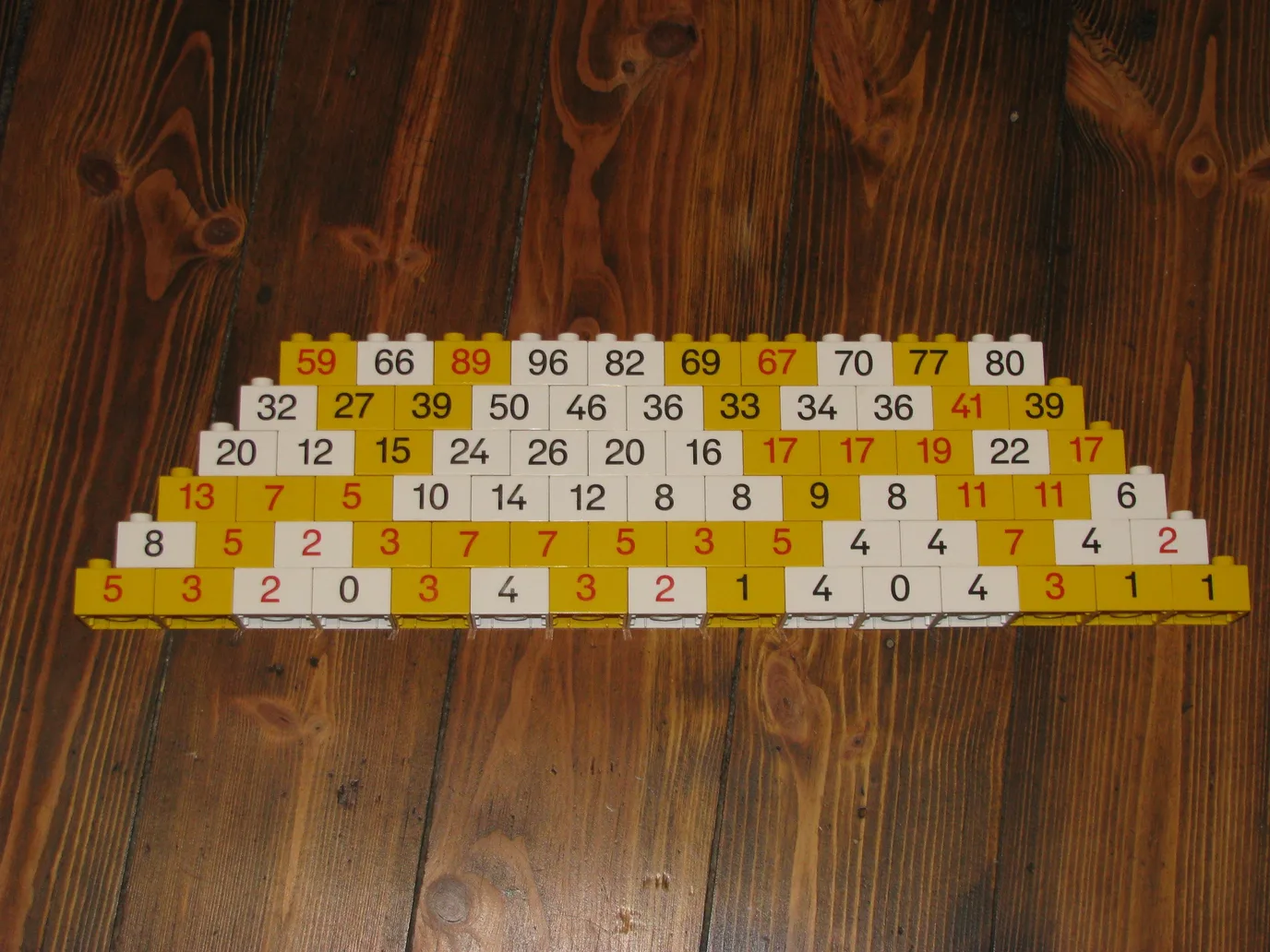
A large number wall with eleven base bricks

The Idea

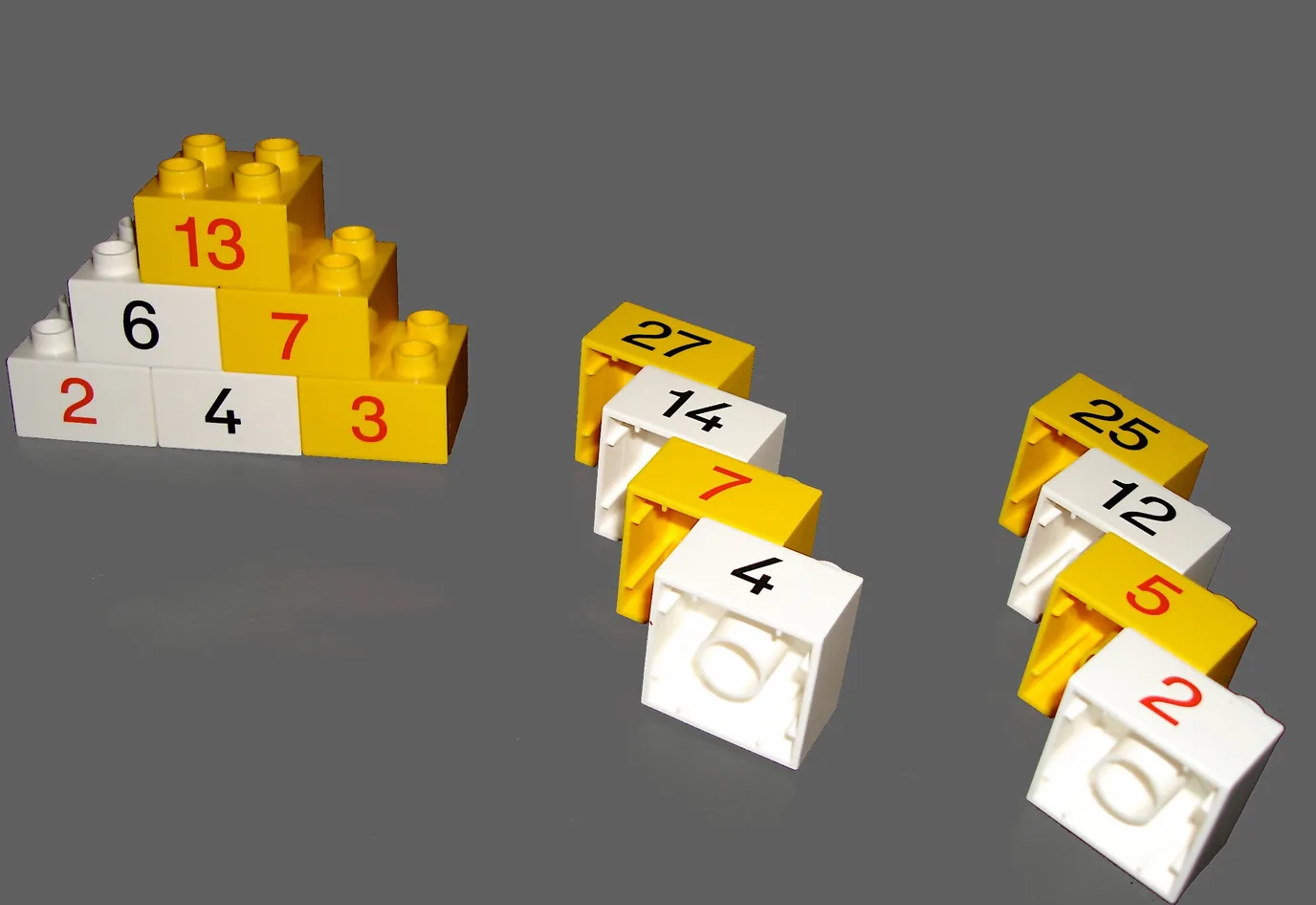
One rule is enough: a brick resting on two neighbouring bricks carries their sum. Row by row the wall grows until the top brick is reached.

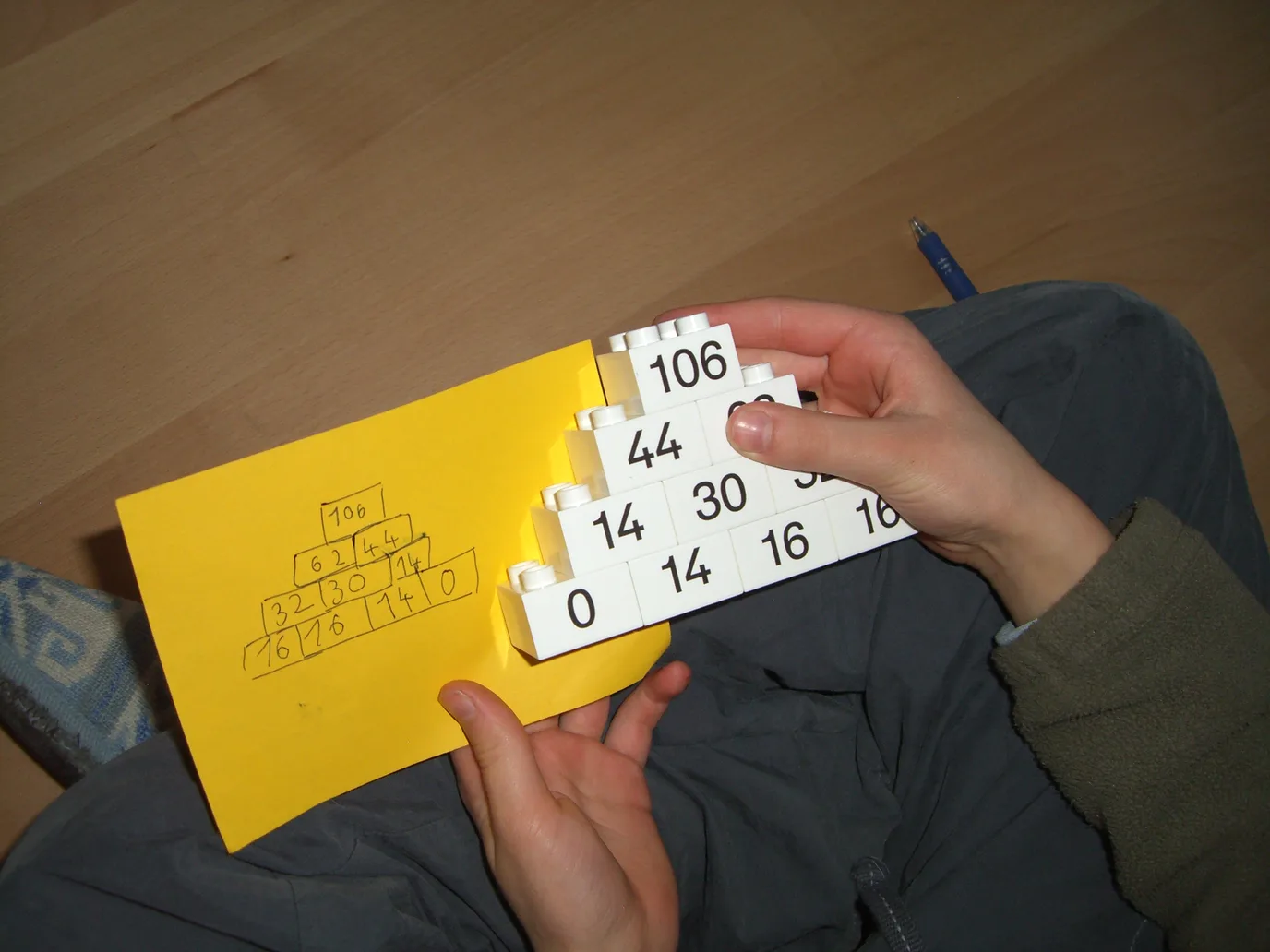
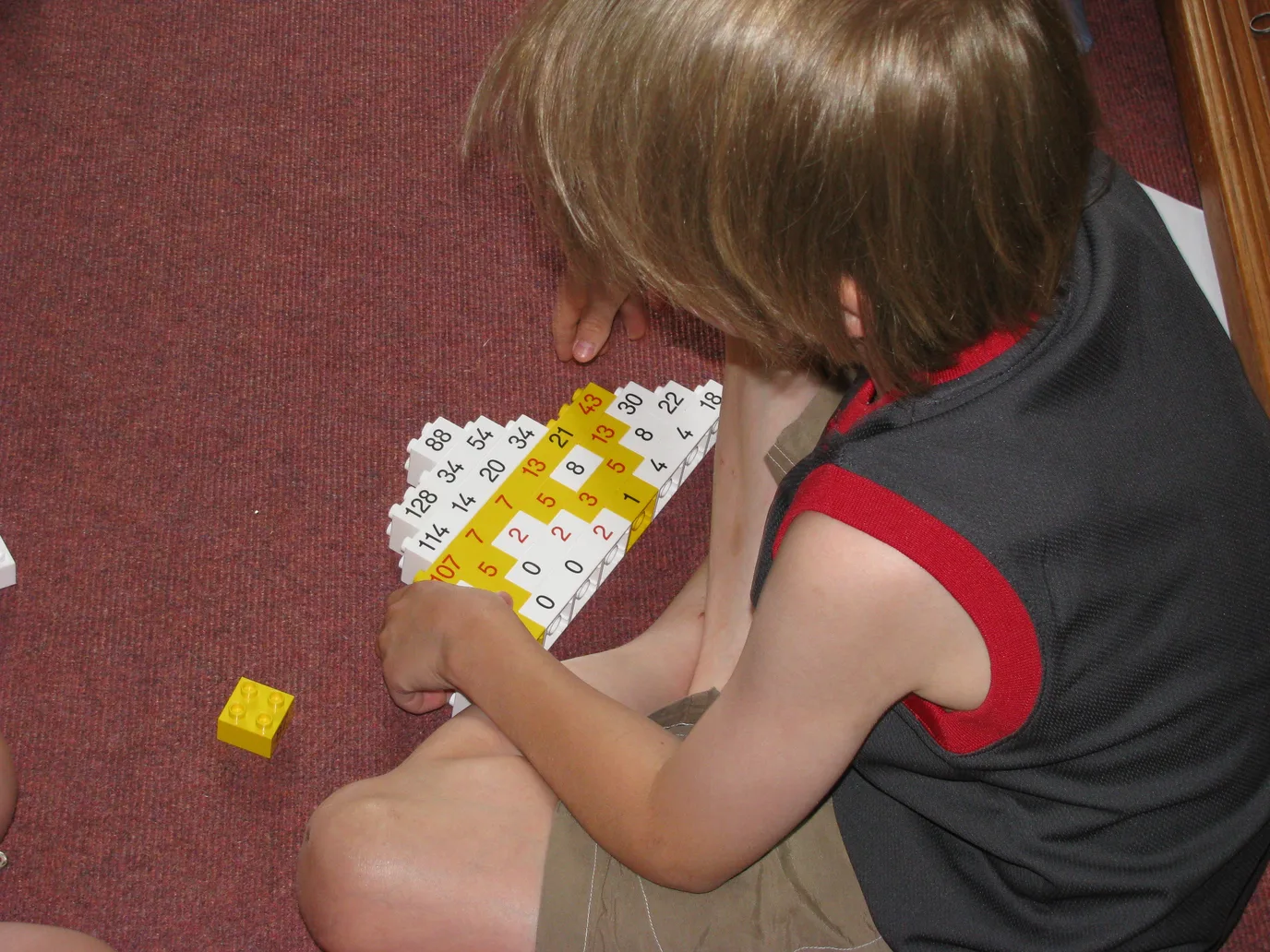
On paper, number walls often stop at calculating. With bricks, children can swap a base brick, exchange two bricks or rebuild the wall – and immediately see what changes and what stays the same. Questions such as “What happens to the top brick if one base brick increases by one?” lead to real mathematical discoveries: each base brick counts as often as there are paths from it to the top.

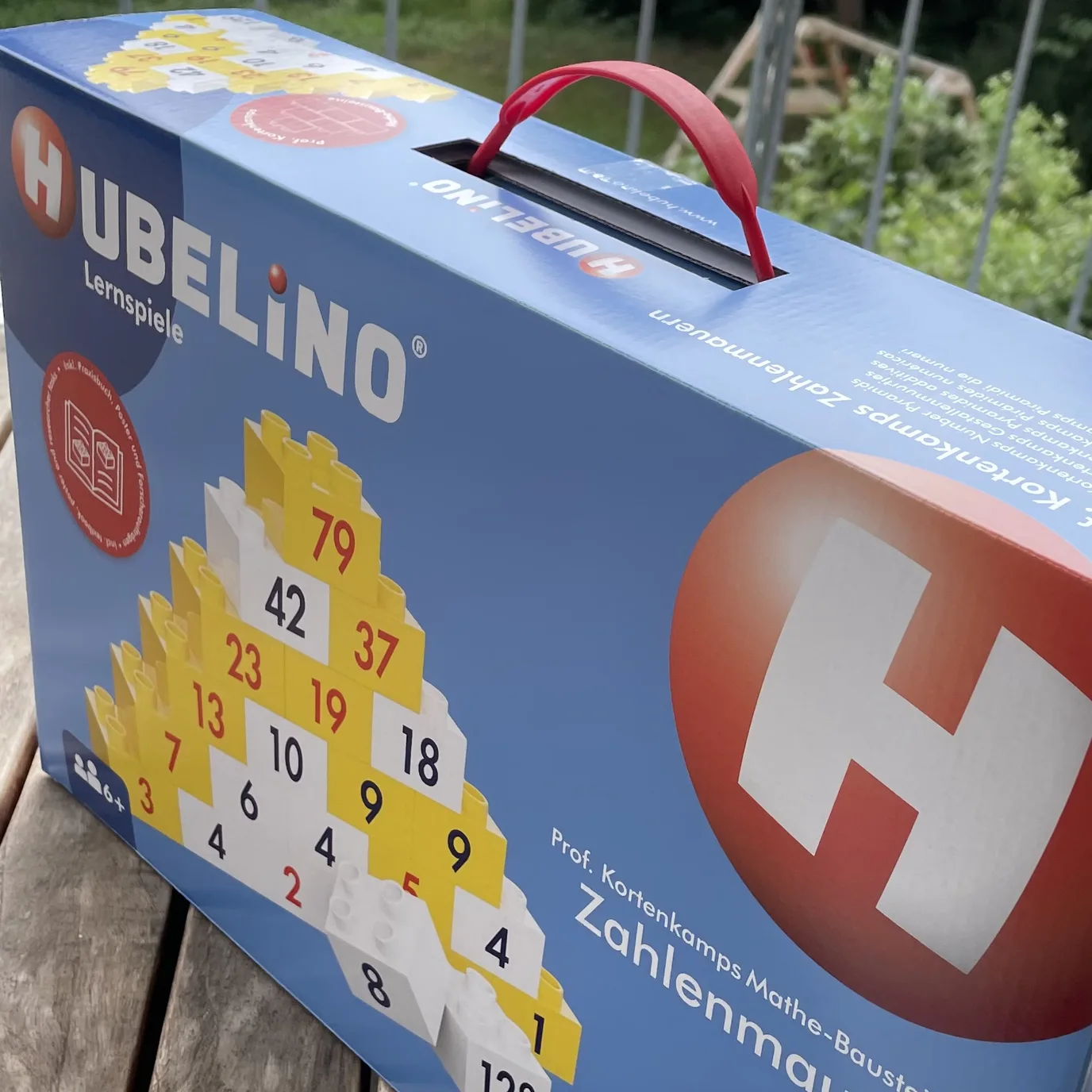
The colours carry information, too: even numbers are on white bricks, odd numbers on yellow ones, and prime numbers are printed in red.

Where to Get Them

The number walls are available from Hubelino as Prof. Kortenkamps Mathe-Bausteine: 230 printed bricks with a bilingual handbook, worksheets and a poster.

Literature

Our publications on number walls are in German.

Our Publications

Bracket Mountains

The same idea – making the structure of calculations visible with bricks – led to bracket mountains for secondary school algebra.